More predictable navigation | Reduced support calls | Increased user confidence | Phased rollout across products
The Decision
Chose phased modernization over a full rebuild to reduce risk
and preserve workflow stability
Full Rebuild
High risk to existing users
Disruptive to daily workflows
Longer time to value
Phased Approach
Lower risk to existing users
Incremental improvements
Faster impact
What I Did
Restructured Platform Around Workflows
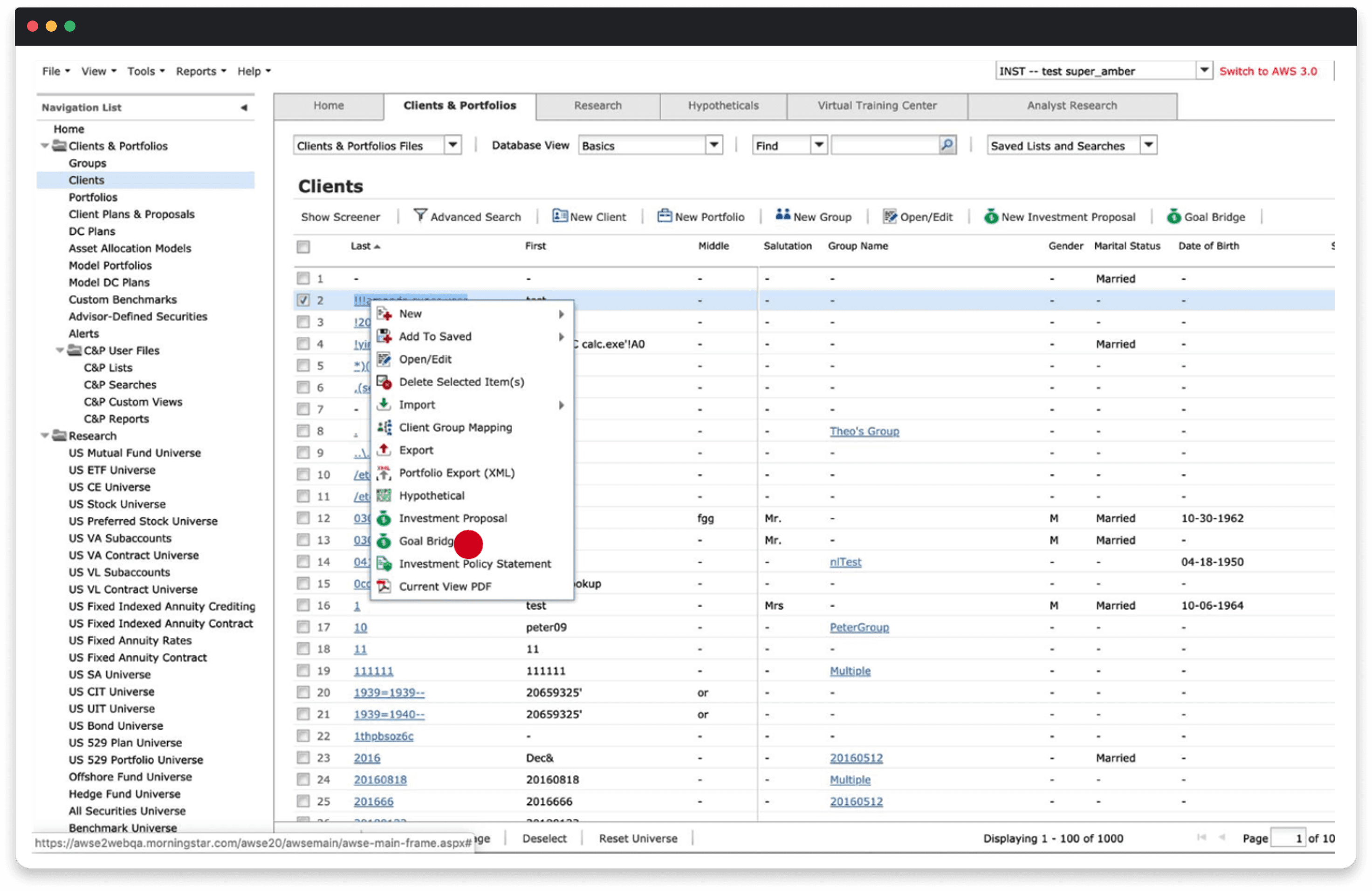
The platform was built around separate tools, not how advisors actually work. Completing a single task meant jumping across AWS, Hypothetical Illustrator, and GoalBridge.
I mapped how these systems connected, identifying overlaps, gaps, and broken handoffs. This allowed me to redefine the experience around core advisor workflows instead of tools.
Key Actions
Defined core advisor jobs and entry points
Audited workflows across products
Simplified navigation around those jobs
Standardized patterns across tools
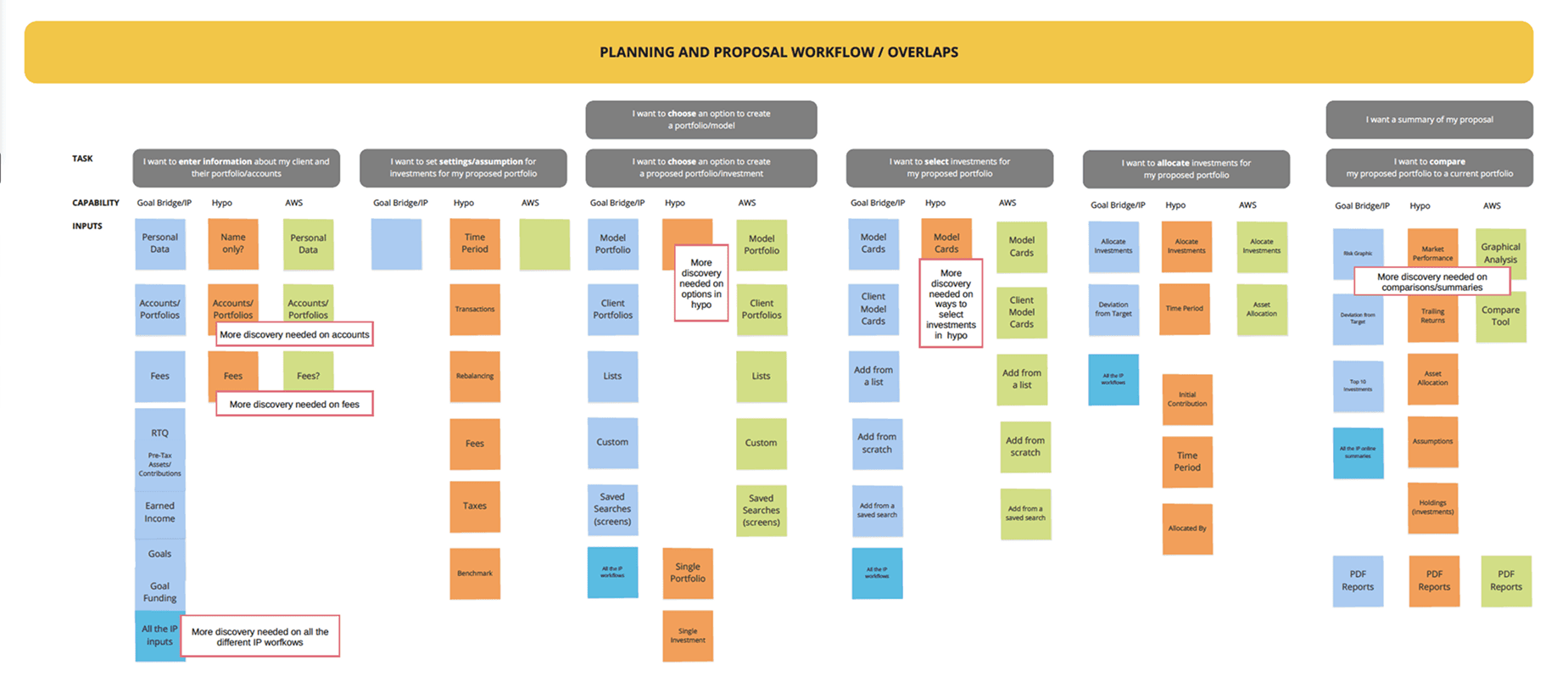
Workflow mapping across AWS and connected tools— Identified overlaps, gaps, and inconsistencies across planning and proposal workflows.
Simplified Navigation and Information Architecture
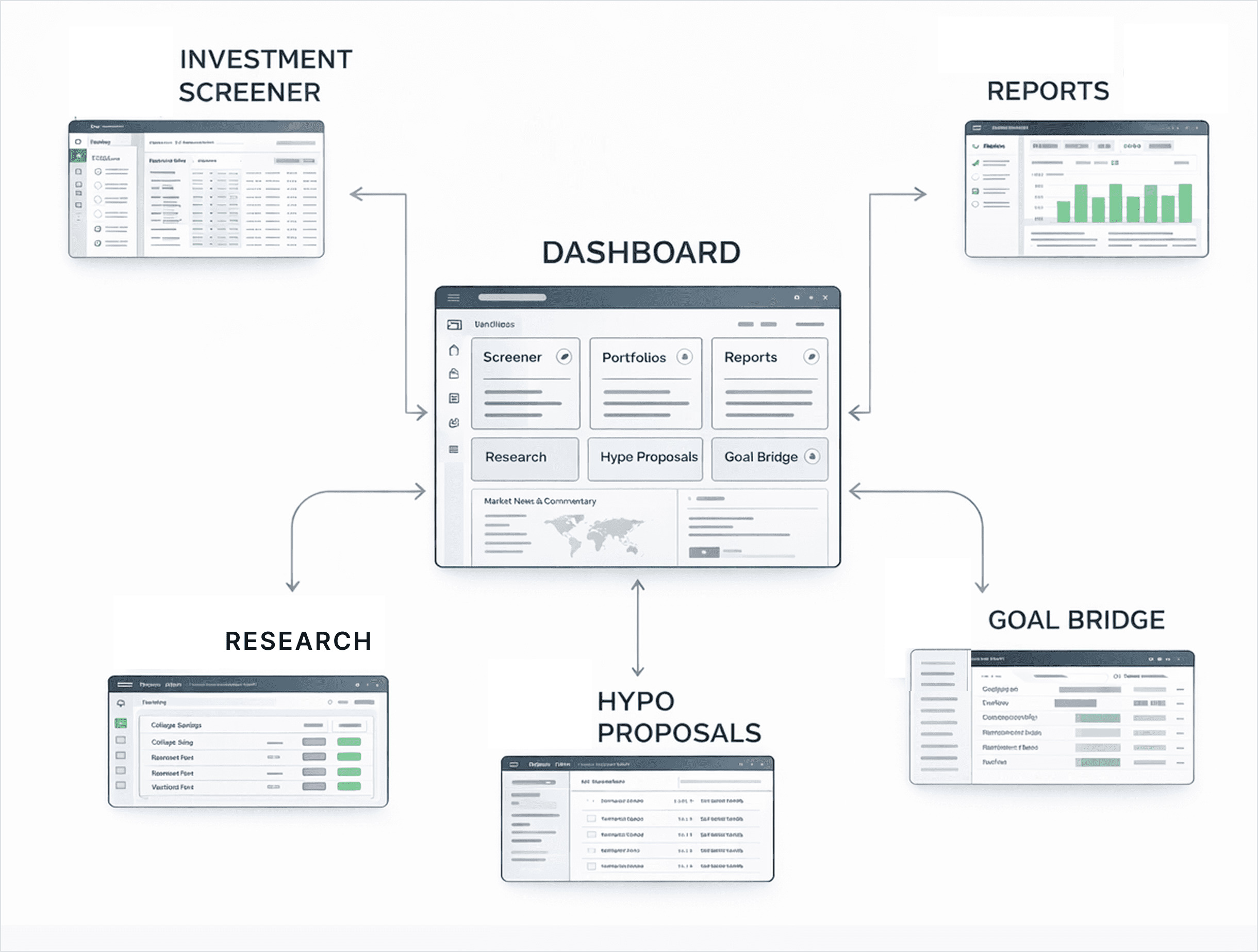
Workflow mapping — shaping a unified, task-based structure.
Validated and Applied a More Predictable Experience
To ensure changes improved usability without disrupting expert users, I tested key workflows focused on speed, predictability, and task completion.
The signal was clear. Advisors could find key areas faster, workflows felt more consistent, and changes felt safe for long-time users. These insights directly shaped both the navigation structure and final interface decisions.
Key Actions
Identified friction in navigation and task flows
Tested core workflows with advisors
Refined structure based on consistent user feedback
Applied improvements to layout, hierarchy, and interaction patterns
Task ease improved to ~5/5 in validation sessions
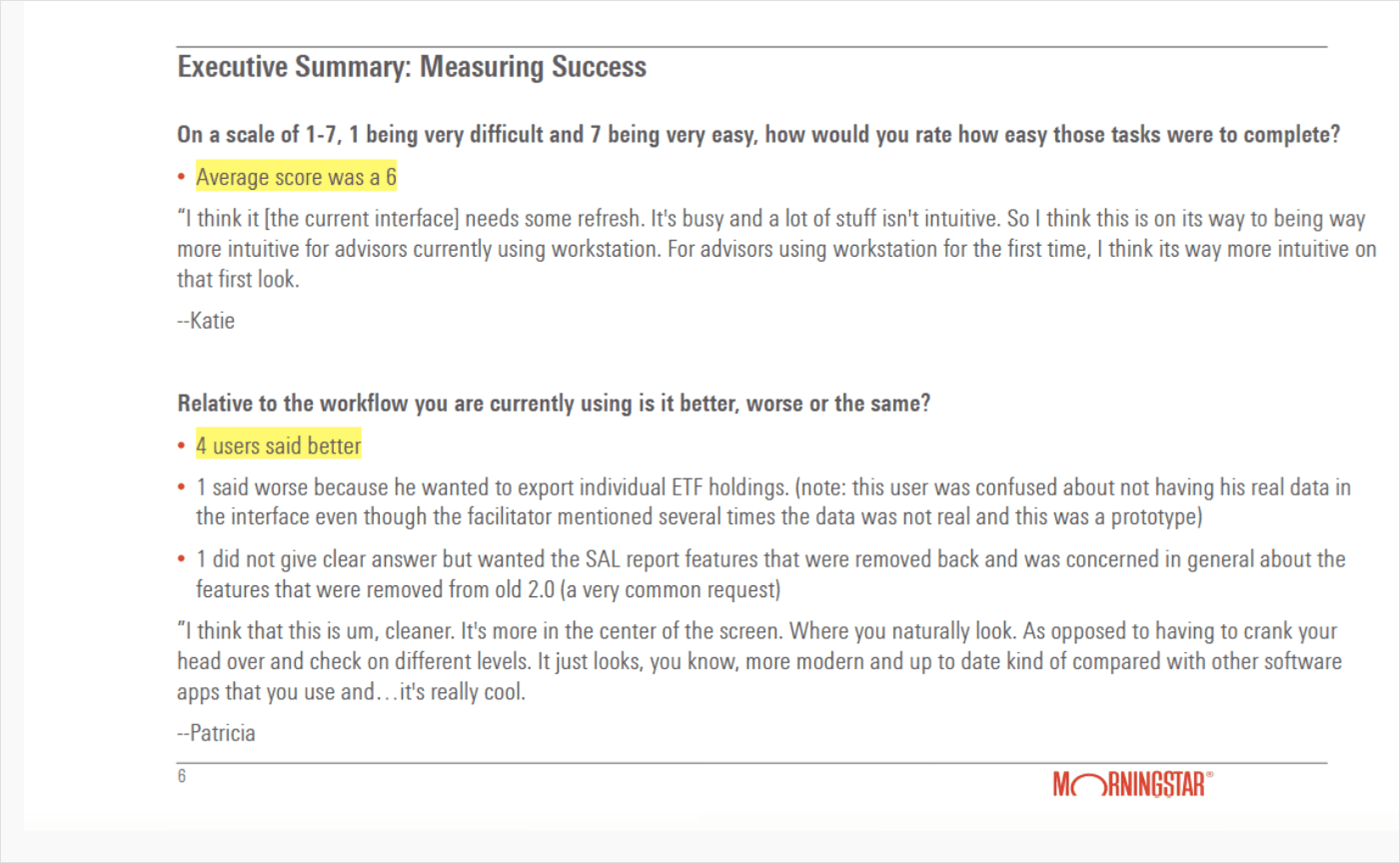
Usability testing focused on speed and predictability — advisors reported higher task ease and stronger confidence in the updated navigation.
Outcomes
The modernization improved usability without disrupting how advisors worked — increasing confidence while reducing operational friction.
Improved usability across workflows
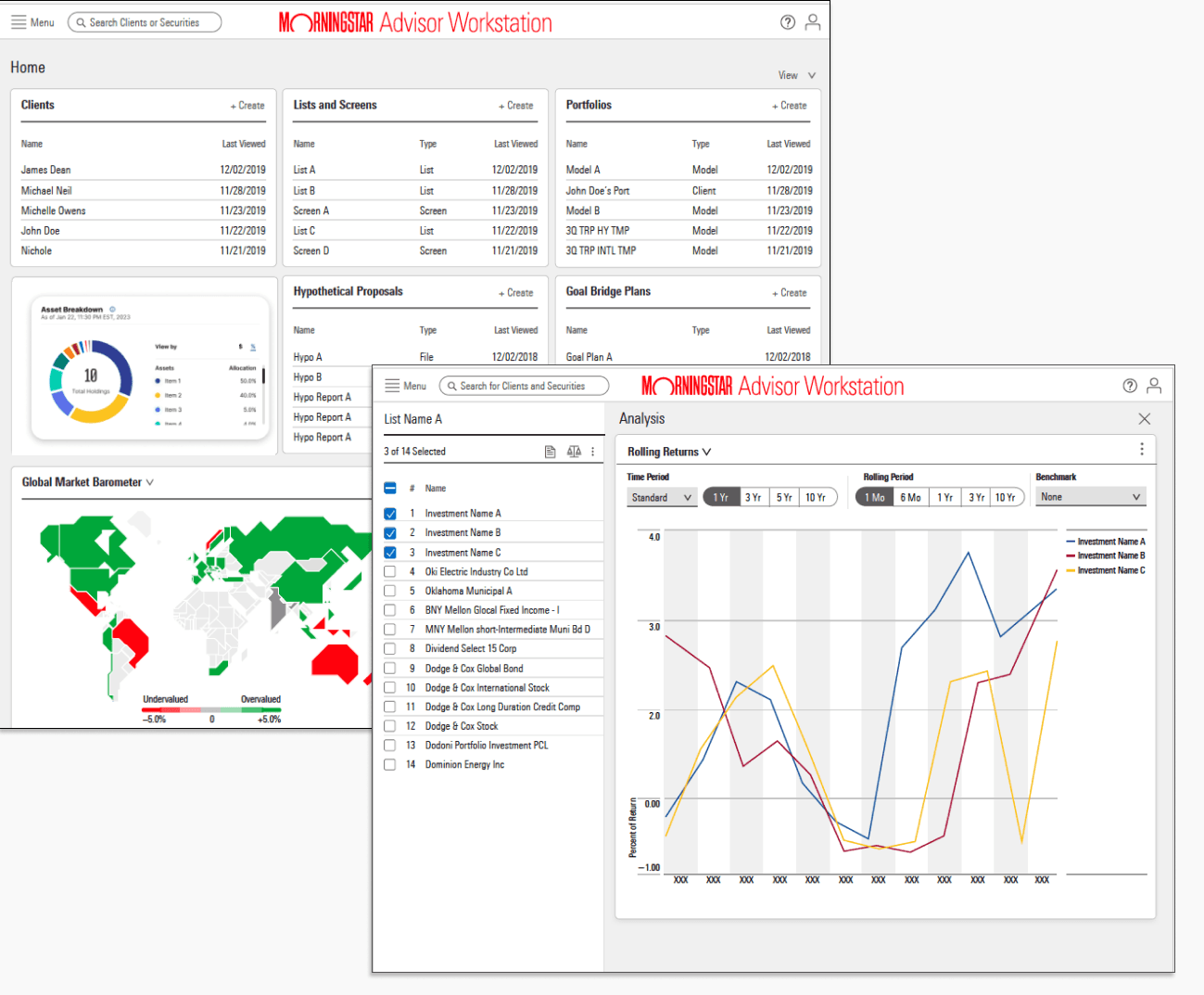
Updated interface supported real advisor workflows — reinforcing confidence, improving usability, and reducing support needs. helped validate direction and shape MVP priorities.

© 2026 Bill Varga